Sachiko and Mariko's mother-daughter bond strained by control and neglect
A Pale View of HillsSachiko and Mariko's mother-daughter bond strained by control and neglect is defined by a persistent gap between Sachiko's declared maternal responsibility and the care Mariko appears to need. Sachiko presents herself as the authority on her daughter's welfare, yet repeatedly leaves Mariko to manage major changes and painful memories with limited reassurance. As Sachiko's plan to move to America falters, her explanation shifts toward the promise of a settled life back in Japan, without resolving the tension between protection and control.
Care and Responsibility
When Etsuko raises concern about Mariko, Sachiko turns the offer of help back toward her neighbor. After Etsuko has come to report that Mariko has a cut on her face and that parts of the river are dangerous, Sachiko asks her to look after the girl for the day, saying she will return in the afternoon. Etsuko accepts but points out that Mariko seems young to be left alone all day. Sachiko answers with a smile that Etsuko will make a splendid mother. The exchange gives Etsuko an immediate caretaking role while Sachiko leaves to go into town; Sachiko's warm compliment does not answer Etsuko's practical concern about her daughter's supervision.
The arrangement also establishes a pattern in their bond: others may be asked to tend to Mariko, while Sachiko reserves the right to define what is best for her. That pattern is not enough to establish Sachiko's private motives, but it places her confident language about motherhood alongside scenes in which Etsuko, rather than Sachiko, responds directly to Mariko's vulnerability. The tension between the two forms of care becomes especially visible when Sachiko later insists that her daughter's interests come before everything else.
The Proposed Move and Mariko's Welfare
Sachiko treats emigration to America as manageable for herself. She says she already speaks English to some extent because she and Frank talk in it, and expects to become accustomed to the country and its language. Etsuko redirects the discussion from Sachiko's ability to adapt to Mariko's future. Sachiko first answers that children settle more easily into new surroundings, then reacts impatiently when Etsuko asks whether Mariko is ready for such a large change. She insists that she would not leave the country without carefully considering her daughter's welfare and says she has discussed the matter with Frank.
The certainty of Sachiko's reassurances contrasts with the scale of the change under discussion. She promises there will be no problems, but the evidence offered is chiefly her own assurance that she has considered the question. Mariko's perspective is not heard in this exchange. Sachiko speaks for her, predicting that she will adapt, while Etsuko keeps returning to the particular child whose future the decision will alter. Their disagreement is therefore not simply over America: it is also over whether a mother's confidence can stand in for her daughter's readiness.
Mariko's Memories and Distress
Sachiko connects Mariko's difficult moods to what she witnessed in Tokyo during the wartime destruction. She describes weeks of danger, rubble, and people living in tunnels and derelict buildings, and says that Mariko saw terrible things there. Among those experiences, Sachiko singles out the woman Mariko has spoken about: Mariko has always remembered her. As Sachiko recounts this history to Etsuko, she looks intently at the backs and then the palms of her hands. The gesture accompanies a disclosure that helps explain why Mariko's past remains present, but the account reaches Etsuko through Sachiko rather than through Mariko herself.
In a later scene at the cottage, Etsuko hears Sachiko speaking angrily before entering to find her standing in the middle of the room with Mariko before her. Sachiko's carefully prepared face appears mask-like in the lantern light. She apologizes to Etsuko for Mariko giving her trouble, but the scene offers no comparable account of what Mariko has just experienced or what prompted the anger. The contrast between Sachiko's composed presentation to an adult and the conflict unfolding with her daughter leaves the strain in their household visible without explaining it away.
A Change of Plan
When Etsuko asks what she intends to do, Sachiko again declares that her daughter's welfare must come first, distinguishing herself from a young woman without regard for decency and insisting that a mother's responsibility takes precedence. She plans to write to her uncle, explain her whereabouts and circumstances, and discuss the possibility of returning to his house. The American future she had defended as safe and manageable has given way to the prospect of returning to family in Japan.
Sachiko presents this reversal as a fortunate outcome. She imagines that America would have unsettled Mariko: the girl would have found herself among foreigners and suddenly had an American father. Sachiko concludes that Mariko has already experienced enough disturbance and deserves somewhere settled. Her reasoning acknowledges the upheaval that Etsuko had emphasized, but it arrives after Sachiko had repeatedly dismissed the risk of emigration. The change therefore both responds to Mariko's need for stability and exposes how readily Sachiko's account of what serves her daughter can change with the circumstances.
Significance of the Bond
The relationship is marked less by an absence of maternal feeling than by Sachiko's power to define maternal feeling on her own terms. She invokes Mariko's welfare to justify both leaving Japan and the later possibility of returning, while Mariko's needs are often conveyed through Etsuko's questions, Sachiko's explanations, or signs of conflict. That imbalance makes the repeated claim that Mariko comes first consequential: it is a declaration of responsibility, but not proof that mother and daughter understand her welfare in the same way.
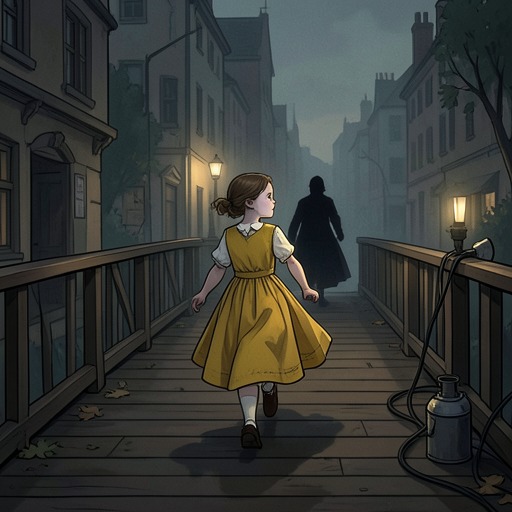
Etsuko's place in these scenes sharpens the contrast. She notices Mariko's injury, questions the proposed move, and enters when the girl has run outside; Sachiko, in turn, entrusts Etsuko with looking after her and later apologizes to her for Mariko's behavior. Their bond is thus shown partly through the care Sachiko delegates and the concern Etsuko voices. The eventual possibility of a settled home does not resolve the relationship's strain; it leaves the central question intact, as Sachiko's assurances and Mariko's experience remain distinct accounts of what a mother owes her daughter.